

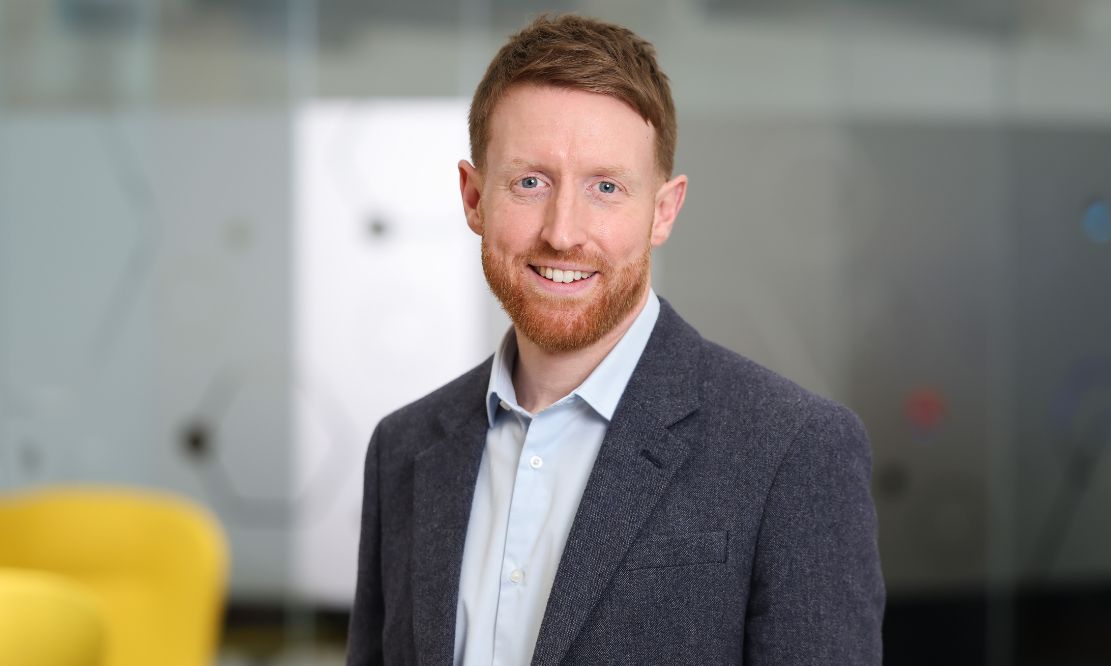
Q&A with Head of Regional Business for Southern Region at Invest NI
Alistair Quinn is Head of Regional Business for the Southern region at Invest Northern Ireland.
In his role, he leads a regional team that delivers services to support businesses in the Southern region, which includes Newry, Mourne and Down District Council, and Armagh City, Banbridge and Craigavon Borough Council.
In this Q&A, Alistair discusses his ambitions for the Southern region, its opportunities,
and how the regional team is working with businesses in the area.
What are your ambitions as Head of Regional Business for the Southern region, and what do you hope to achieve?
I’m delighted to be working in the Southern region. I’m local to the area, so there’s a
real personal connection for me, and I’m pleased to be supporting businesses in a
region I know well.
I have spent my career focusing on driving progress through effective partnership
and collaboration.
I want to foster collaborative partnerships in this role and work towards solutions to growth barriers to ensure economic prosperity for all living and working in this region.
One of my key ambitions is to capitalise on the cross‑border opportunities that come
with our location.
The Southern region is uniquely positioned near the Republic of Ireland, and I want to help businesses make the most of that – whether that’s through new connections or growth opportunities that wouldn’t exist elsewhere.
You mentioned cross‑border opportunities. What makes the Southern region unique in this respect, and what does that mean for businesses?
Location is our standout differentiator. Being positioned on the Dublin–Belfast
Economic Corridor brings both opportunities and challenges, but it’s what truly sets
the Southern region apart from others.
The Dublin-Belfast Economic Corridor is a partnership between eight councils and
two universities and has the potential to boost cross-border trade, inward investment
and advantages in logistics and supply chain.
Sitting on the Dublin–Belfast Economic Corridor gives us a distinct advantage compared to other border regions. We benefit from strong infrastructure and
transport links directly into Dublin, which isn’t the case everywhere else.
It’s a unique proposition within Northern Ireland and something we should continue to build on.
We have strong further education provision, solid transport links, and sector strengths in advanced manufacturing, engineering and agri-food. There’s also a lot of untapped potential, particularly through collaboration with stakeholders and future cluster development. That’s an opportunity I’m keen to pursue.
How has the business landscape in the Southern region changed over the years?
Traditionally, the region has had a strong base in advanced manufacturing, engineering and agri-food, and those sectors remain important. Over the past decade or so, we’ve also seen growth in business and professional services.
Companies such as Finnebrogue, FD Technologies, Almac and Thompson Aero, have invested in the region, encouraging economic development and creating good jobs in our key sectors.
Another significant change is the labour market. Compared to 15 years ago, the pool
of available labour has tightened due to a number of factors. Businesses are now looking for higher-level skills, dealing with labour supply constraints and competing
with employers across the border for the best talent.
What are the main challenges facing the Southern region?
Major infrastructure and corporation tax are issues we know businesses are challenged by. But as these are policy matters, there is limited scope for Invest NI to address these.
Skills are another challenge. The Southern region doesn’t have a university, so we rely heavily on further education colleges to supply skills locally. At the same time, our proximity to the Republic of Ireland presents both an opportunity and a threat.
While it opens markets, it can also lead to an outflow of workers attracted by higher
wages across the border.
That labour mobility does make recruitment difficult at times, particularly for certain
skill sets. It’s something that has been discussed extensively in skills forums, and it
remains a key issue for businesses in the region.
Looking ahead, what future opportunities do you see for the Southern region?
There are significant opportunities linked to City and Growth Deals. Newry, Mourne
and Down is part of the Belfast Region City Deal, while Armagh City, Banbridge and
Craigavon is involved in the Mid South West Growth Deal.
One of the most exciting developments is the planned Agri‑Bio Innovation Centre.
This has the potential to become a major asset for the region, supporting agri‑food
businesses and their supply chains and helping to establish the Southern region as a
powerhouse for agri‑food innovation.
There are also infrastructure projects that will unlock further potential, such as road
developments that will reduce congestion, improve town centres, and make areas more attractive for businesses and investment.
At a local level, Local Economic Partnerships (LEPs) are focusing on practical priorities, including workspace development, productivity, AI adoption for SMEs, and
addressing land availability.
These initiatives align well with what businesses in the region are telling us they need.
We’re also trying to encourage more businesses here to realise opportunities in the
green economy.
The Southern region has plenty of successful agri-food and manufacturing businesses that have potential to diversify their offerings for green growth.